
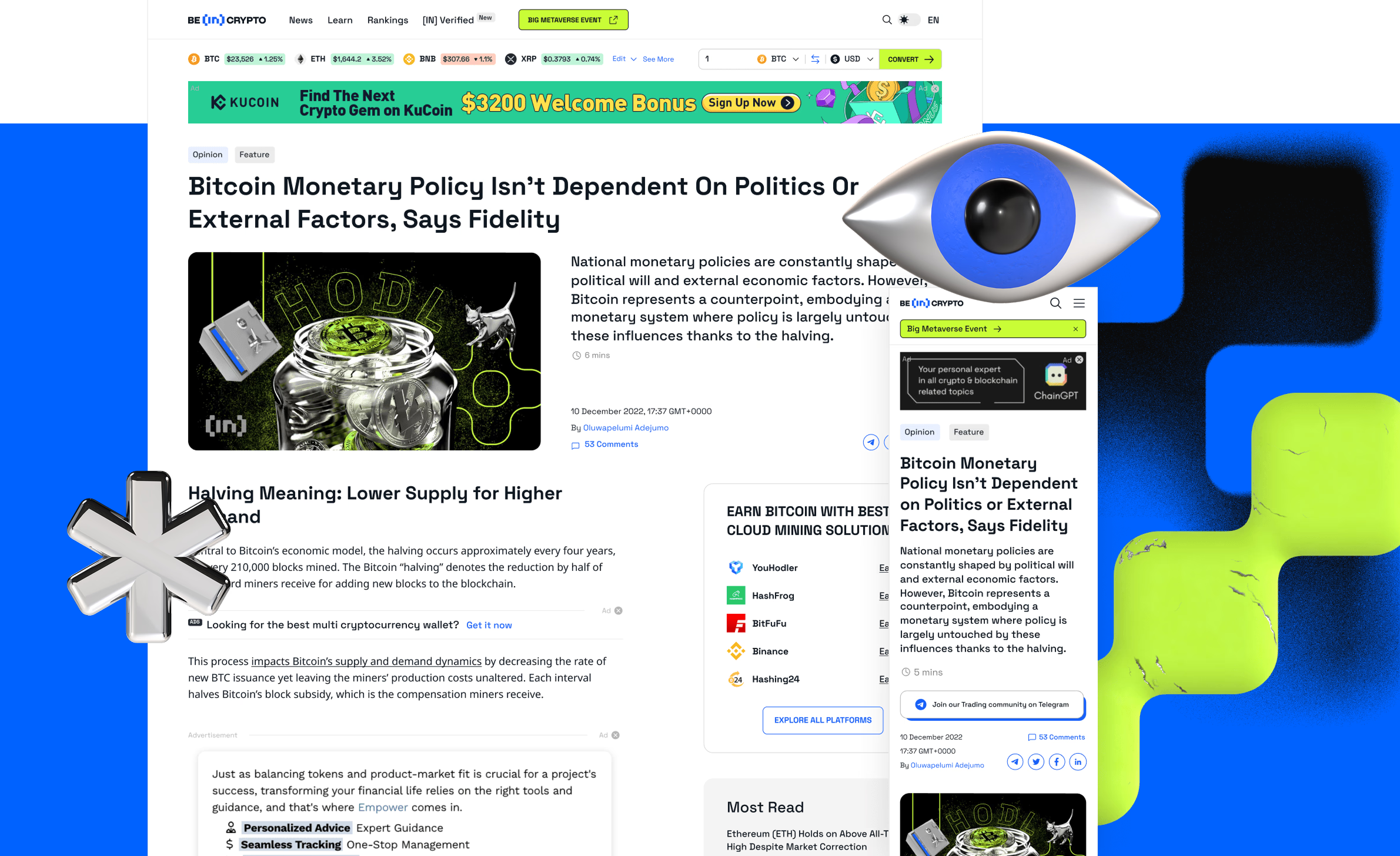
Grew a crypto media platform from 1.2M to 5M monthly users
BeInCrypto grew from 1.2M to 5M MAU in just 8 months after I built the design team and strategy from scratch, redesigned the ad system, and improved content engagement. Bounce rate dropped by 44%, CTR doubled, session duration nearly doubled, revenue grew by 36%, and we successfully launched a B2B product that hit 550k users within six months.
When I joined BeInCrypto, it was already one of the largest cryptocurrency media platforms in the world. Millions of people came daily to read about Bitcoin and blockchain, but the experience was far from perfect. The company earned money from advertising, which meant everything depended on engagement: how long users stayed on site, how many pages they read, how often they clicked.
The ads were aggressive, pop-ups screamed in neon colors, and trust in the brand was dropping. At the same time, the company wanted to expand into B2B, which required a stronger foundation. Design did not really exist as a function. There were no processes, no design culture, no team. My job as Head of Design was to change that.
The problems were everywhere
Articles were written in a "Wikipedia" style that nobody wanted to read. The site ran in 15 languages, including RTL, but localization was inconsistent. Ads frustrated more than they converted. And without processes, work was slow and fragmented.
There was no design culture, no shared language, and no way to measure whether design decisions were helping or hurting. Every change required heroic effort with no guarantee of outcome. The system was held together by individual effort rather than structure.
Build the design function from scratch, improve the reading experience so users stayed longer, rethink advertising to be effective without being abusive, and prepare the ground for a B2B product launch.
- 01Build the design department from scratch — team, culture, and rituals.
- 02Create processes, sprint planning, handoff rules, and ceremonies.
- 03Improve the reading experience so users stayed longer and explored more.
- 04Rethink advertising to be effective without being aggressive or deceptive.
- 05Prepare the ground for a B2B product launch.




I started alone, diving deep into the product and running a full audit. At the same time, I worked with HR to build a pipeline for designers. I defined exactly who we needed, created ideal candidate profiles, taught recruiters how to judge portfolios, and introduced prescreening with structured questions.
We built a team across product, communications, and R&D, and hired an art director for branding. Once the team was in place, I introduced basic DesignOps: sprint planning, handoff rules, documentation, and design ceremonies. We rotated designers between products to keep ideas fresh, and added cross-feedback sessions where everyone reviewed each other's work.
With the CPO, we restructured into small squads pairing designers and product managers. These tribes worked autonomously, which freed me to focus on strategy and long-term goals.


Through discovery and HADI cycles, we identified three key levers: tone of voice, content navigation, and ads. We rewrote articles in a more engaging, human style. We added internal cross-linking so users naturally explored more content.
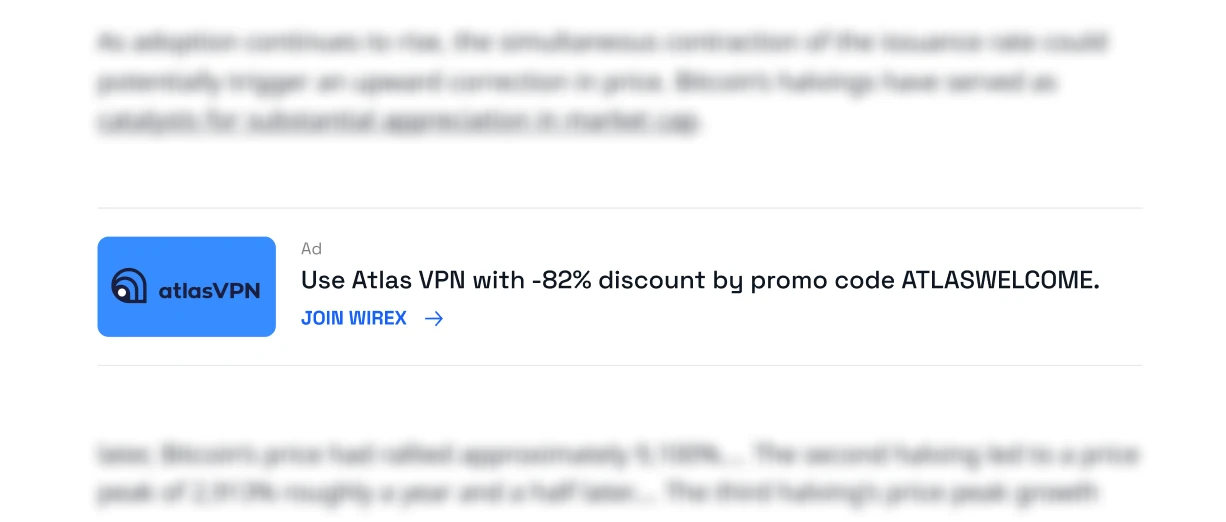
The loud, intrusive pop-ups were replaced with clean, well-integrated banners and interactive ad formats. We labeled ads clearly, explaining what they were. Counterintuitively, this honesty improved trust and performance. CTR doubled to 7 percent.
The other ad formats were freed from dark patterns and included explanations indicating that they were advertisements. This honesty improved the Customer Satisfaction Index (CSI).




We also tackled the problem of underused products. Custom widgets became bridges inside the ecosystem: a currency widget led into the Price product with predictions, while a Convert widget kept users on site or guided them to partner platforms. Cross-product traffic grew by 30 percent.
At the same time, we consolidated feedback channels, which gave us the confidence to quickly launch a B2B product. In just two months, it went live, and within the first month it brought in $40k net profit. Six months later, more than half a million people were using it.
The outcome
The platform won the ADVFN International Financial Award for Best Website for Cryptocurrency News. MAU grew from 1.2M to 5M. Bounce rate fell from 88.6% to 49.5%. Pages per session jumped from 1.17 to 4.29. Session duration nearly doubled.
Inside the company, design became a recognized strategic function. The B2B product launched in two months and generated $40k in its first month. Within six months it had over 550,000 users.
Lessons learned
Honest, user-friendly advertising outperforms dark patterns — not just ethically, but commercially. Transparency built trust, and trust drove clicks. Cross-product integration is a powerful retention lever: when each feature leads naturally to another, users don't have a reason to leave.
Building processes early pays off. It gives the team stability and the company speed. This project was my best management case so far: I built a design team and culture from scratch, implemented DesignOps, and proved that design can directly drive growth and revenue in media.